


An ERP system brings real-estate work, such as finance and property management, into one system. Teams can share current information and reduce repeated tasks. This can help them make decisions faster. As the business grows, the system can support more properties, projects, and users.
An ERP system can connect sales, finance, and property management. Teams can use shared information instead of keeping separate files. This can reduce errors and make it easier for staff to work together and make decisions.
An ERP system stores key details in one place. Teams can find property, finance, lease, and maintenance information in a shared system. This can reduce information gaps and make it easier to find and report current data.
ERP can help leaders compare properties across a portfolio. Track income, costs, maintenance work, and project spending for each property using the same categories. Then review the results together. This can help leaders see where to look closer, invest, or act. Good comparisons depend on consistent property and accounting details.
A useful real-estate ERP review can link upcoming lease expiries with renewal status, vacancy, and property work still in progress. This helps teams spot where several changes may affect the same property's income or workload at once. Use the view to assign follow-up on renewals, readiness, and maintenance; the system supports the review, while people make the decisions.
Customer relationship management (CRM) is the practice of organizing lead and client details, conversations, and follow-up. When connected with ERP, CRM tools help real-estate teams share this history, coordinate responses, and provide more consistent service.
ERP systems provide tools for data reporting and analysis to create customized reports and dashboards. Error-free, customised, and real-time reports allow for informed decision-making which helps your business adapt to industry changes, and take advantage of new opportunities.
Real-estate firms must follow laws and manage business risks. ERP tools can help teams organize records and track key steps. They cannot guarantee compliance or prevent every risk.
As real estate businesses grow, they need systems that can scale along with them. ERP systems are designed to accommodate growth by allowing the addition of new functions, assets, and users without disrupting operations. This scalability ensures that an ERP system remains an asset rather than a lag as it grows.
Real estate projects involve planning, coordination, and management. ERP systems come equipped with powerful project management tools that enable teams to plan work, budget, and track progress over time.
Property Lifecycle Management
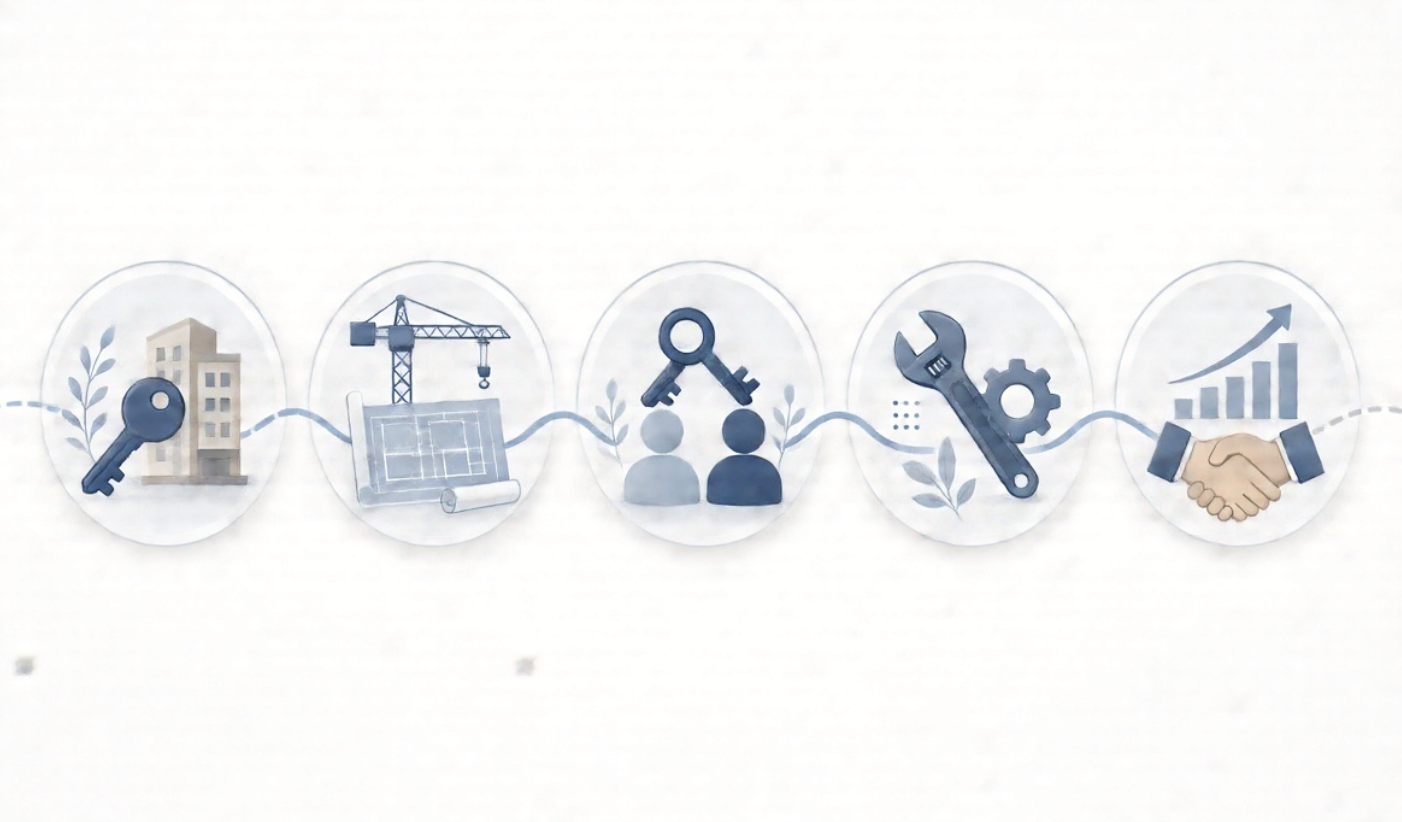
A property moves through stages, from purchase and development to daily use and upkeep. ERP tools can help teams track each property over time. Staff can review how space is used, plan maintenance, and track costs. For examples of lease and asset-management extensions, see Softype’s guide to Perago SuiteExtensions.
ERP can help real-estate teams make better use of their business data. Teams can also adjust work processes as needs change. These tools may help a business serve clients and respond to market changes, but results depend on how the system is used.
Technology keeps changing, and real-estate businesses need systems that can adapt. An ERP system can connect with other tools as business needs change. Teams should check that any new system works with the tools they already use.
An ERP system takes time and money to set up. It may help teams work faster, improve decisions, and lower some costs. The value depends on the system, the setup, and how well people use it. To understand common implementation risks and ways to address them, see Softype’s ERP implementation guide.
In short, given the scenario today, investing in an ERP system is not just an option but an important step forward for the real estate sector. From improving operations to providing better data insights, ERP systems can provide many benefits that directly impact business performance. In a highly competitive market, having these specialized tools is what sets successful real estate businesses apart.
Softype is a global provider of cloud business automation solutions and an experienced enterprise consulting provider to medium and large enterprises. With offices in the US, Philippines, India, and Kenya and remote delivery and support capabilities, our friendly experts provide Softype clients with the help they need, no matter their geography.
Softype combines practical solutions with expert service, thus maximizing our clients’ investments in their business automation solutions. We have friendly experts who can help guide your team through its digital transformation. From mutual discovery to understanding your requirements and implementing the solution, we will support you every step of the way.
For further information, please contact us here. You can also reach out to us at info@softype.com or call us at +1 650 488 4412 (Global), +63 967 429 9575 (Philippines), +63 917 558 1513 (India), +254 720 940 174 (Africa), and +61 452 183 613 (Australia).
An ERP system can be utilized in the areas of sales, marketing, finance, and property management.
One of the best features of an ERP system is its ability to centralize data.
Financial management is very important for the real estate sector.
In an industry that’s based on customer satisfaction, having a solid CRM system can be a game-changer.
ERP systems provide tools for data reporting and analysis to create customized reports and dashboards.
Compliance with industry regulations and risk mitigation are mutually exclusive concepts.
Simplifying operations means reducing manual work and helping teams coordinate across sales, finance, and property management. An ERP brings shared information and routine workflows together in one system.
Centralized data management stores property, lease, finance, and maintenance information in one shared system. Teams can access consistent, up-to-date details instead of reconciling separate files.
Financial transparency means having a clear view of income, costs, and budgets for each property. Accountability means assigning people to review results and follow up on issues.
ERP-connected CRM keeps lead and client details, conversations, and follow-up tasks in one shared view. Real-estate teams can use this history to respond consistently and coordinate service.
Presentation and analysis means turning business data into clear reports and dashboards. Real-estate teams can use them to track performance and make informed decisions.
These published sources cover the detail behind the points above:
When evaluating ERP for real estate, start with the work your team needs to manage: property-level finances, leases, maintenance, projects, and reporting. Check that the system can support your portfolio structure, connect with your existing tools, and provide clear ownership for follow-up. Oracle NetSuite is Oracle’s cloud-based ERP platform; Softype provides implementation and support services for business systems, including NetSuite.


Helping businesses thrive with integrated ERP solutions.
NetSuite
Service
Company
Contact Us
Copyright © 2026


