

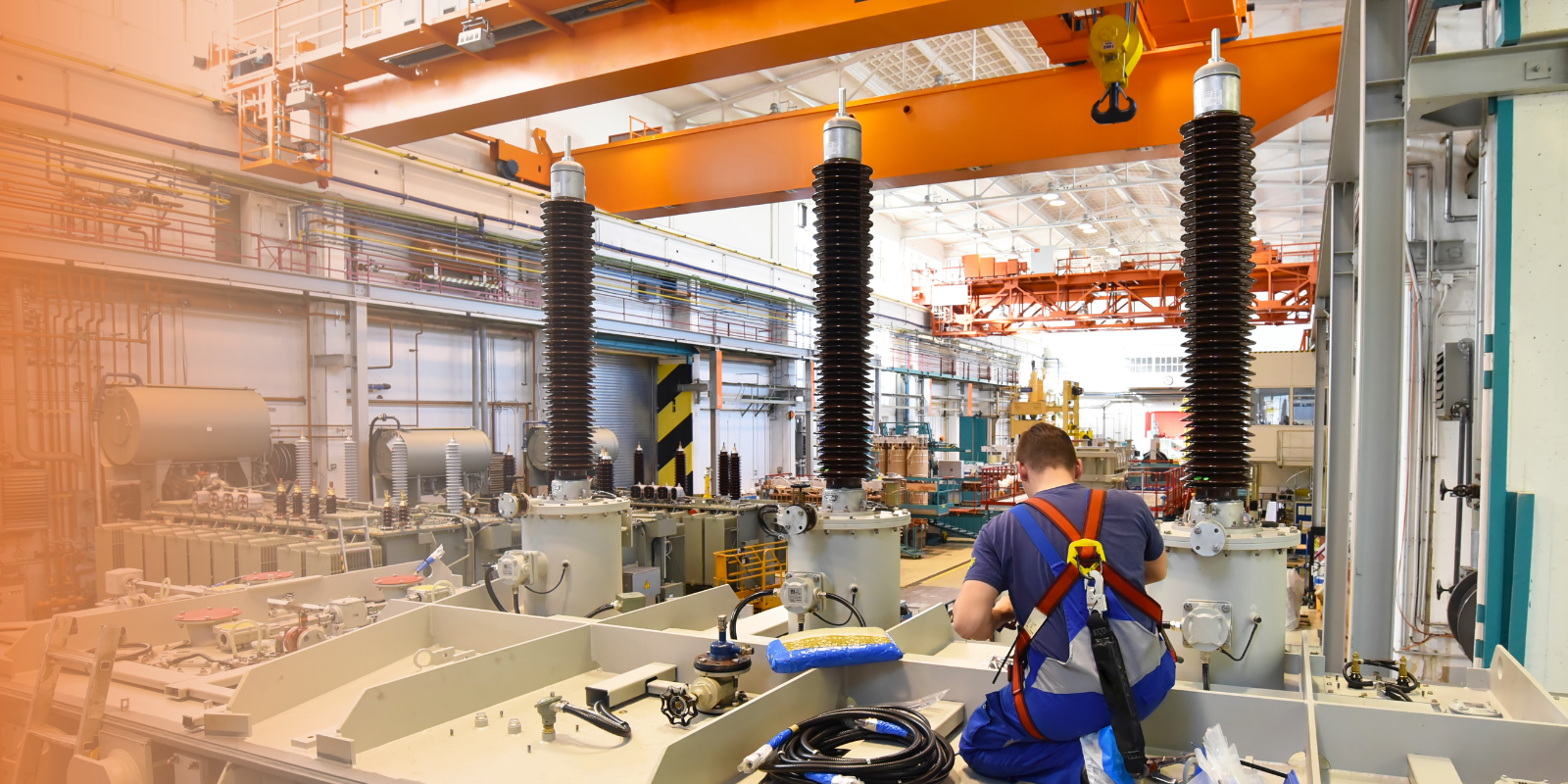
Manufacturing has entered a new era. The factories winning in 2026 are not just running ERP systems: they are layering machine learning on top of them, turning transactional data into predictive intelligence that cuts costs, catches defects, and keeps production lines running. The manufacturing landscape in 2026 is defined by two relentless pressures that together make AI in ERP not just valuable, but essential.
Manufacturing has entered a new era. The factories winning in 2026 are not just running ERP systems: they are layering machine learning on top of them, turning transactional data into predictive intelligence that cuts costs, catches defects, and keeps production lines running.
AI-powered forecasting now reduces supply chain errors by 20-50% (McKinsey). Quality inspection systems detect defects with over 99% accuracy, and predictive maintenance delivers an average 250% ROI when implemented correctly (Deloitte).
This is not a future state. It is happening now, on factory floors from Munich to Michigan. Here is how it works, and what it means for manufacturers evaluating their next ERP investment.
The manufacturing landscape in 2026 is defined by two relentless pressures that together make AI in ERP not just valuable, but essential.
A single manufacturing facility generates terabytes of data every week, from IoT sensors on the shop floor to transactional records in the ERP, supplier delivery logs, and quality inspection images. The sheer volume has surpassed what spreadsheets and human analysts can reasonably process.
Traditional forecasting methods that rely on historical averages carry error rates of 25-40%. Manual quality inspectors, even experienced ones, miss 20-30% of defects under real production conditions. The gap between available data and the decisions being made from it represents a massive competitive vulnerability.
Speed of response now separates market leaders from laggards. AI-driven demand forecasting enables dynamic, weekly forecast updates, replacing the static monthly cycles that major consumer goods companies have already moved away from.
Manufacturers using AI in their ERP environments are seeing 30-40% faster order fulfillment and 15-25% lower logistics costs. Standing still is not neutral: over 92% of manufacturers plan to increase their AI investments in 2026.
AI in ERP may sound theoretical, but its impact becomes tangible when you look at the specific problems it solves on the factory floor. Below are five applications that are reshaping how manufacturers operate.
Demand forecasting is where AI delivers the most immediate ROI for manufacturers. Traditional forecasting relies on historical averages and manual adjustments, which leaves companies exposed to demand swings they did not see coming.
Machine learning changes the equation by analyzing historical sales data alongside seasonal patterns, market trends, weather data, and even social sentiment. Instead of looking backward, these models identify forward-looking signals, including commodity prices, competitor activity, and economic indicators that traditional ERP systems cannot natively process. The result is a forecasting engine that adapts in near real time, reducing stockouts, cutting excess inventory, and stabilizing production planning.
Quality control has traditionally relied on manual inspections and sample testing, both of which are limited by human fatigue and the physical constraints of what the eye can detect. AI-powered computer vision changes this by enabling continuous, full-line inspection at production speed.
Image recognition models analyze production output and identify irregularities in materials or components that may signal defects, including micro-level flaws invisible to the naked eye. Over time, these systems learn and improve through machine learning, making them more accurate the longer they run. Early detection reduces scrap rates, prevents defective batches from reaching customers, and improves overall production consistency.
Unplanned downtime is among the costliest problems in manufacturing. The traditional approach is either reactive (fix it when it breaks) or calendar-based (service it every six months regardless of condition). Both are inefficient.
Predictive maintenance uses IoT sensor data and machine learning algorithms to analyze vibration patterns, temperature fluctuations, pressure readings, and other performance metrics. By detecting early warning signals, these models predict failures before they happen, shifting operations from reactive firefighting to planned, optimized maintenance windows. The payoff is fewer breakdowns, longer equipment life, and significantly lower maintenance costs.
Manufacturers increasingly operate in environments where pricing must respond quickly to volatile inputs: fluctuating raw material costs, shifting demand signals, changing competitor positions, and varying inventory levels. Static pricing strategies leave margin on the table.
AI models evaluate these factors simultaneously and recommend optimal price points in real time. This allows manufacturers to protect margins during supply shocks, capture value during demand surges, and align pricing with actual production capacity. The result is better margin management without the manual overhead of constant price reviews.
Financial fraud and errors cost manufacturers billions annually, yet traditional rule-based detection catches only a fraction of suspicious activity. AI-based anomaly detection takes a fundamentally different approach by analyzing transaction patterns across amounts, frequencies, recipients, locations, and timing.
Rather than relying on predefined rules, these models learn what "normal" looks like for a specific business and then flag deviations, whether that is a duplicate vendor payment, an unusual procurement spike, or a suspicious pattern in expense claims. This acts as a continuous auditor, catching issues in real time rather than at month-end or year-end.
The concepts above are already delivering measurable results across the manufacturing sector. Here is what the evidence shows.
The impact of AI on forecasting accuracy is consistently documented across industries. Traditional methods carry 25-40% error rates, while AI reduces these to 10-16% (McKinsey). AI integration lowers Weighted Absolute Percentage Error (WAPE) by 40-75% and reduces forecast bias by 30-70%.
Manufacturers using AI forecasting report a 25-35% improvement in forecast accuracy, a 20-30% reduction in inventory costs, and 30-40% faster order fulfillment. AI can also cut lost sales from stockouts by up to 65%, while warehousing costs drop 5-10% and administration costs fall 25-40% (McKinsey).
Siemens built machine learning models that pull signals from ERP, sales, and supplier networks, improving forecasting accuracy by 20-30% and lowering inventory holding costs. Mid-size manufacturers report a 30-40% reduction in forecast variance and the ability to identify demand trend changes 50% faster. AI models also detect low-probability, high-impact demand spikes that statistical forecasting misses: the kind of events that create massive stockouts or costly overstock.
Traditional human inspection catches 60-70% of defects at best. AI-driven visual inspection systems achieve over 97% detection accuracy, and the best systems exceed 99%, operating continuously without fatigue and improving over time.
Plants deploying AI quality systems see defect rates drop 30-40%, waste fall by up to 25%, and inspection times decrease by 30% while accuracy improves. One medical device manufacturer using computer vision for assembly monitoring reduced scrap rates by 60% on products valued at $1,200 each.
BMW provides a compelling large-scale example with their AIQX (Artificial Intelligence Quality Next) platform. It uses 26 cameras across the factory floor, combined with AI-powered acoustic analytics and real-time defect flagging. Their Car2X communication technology enables vehicles under construction to compare intended versus actual assembly status, using built-in cameras to identify errors like faulty plug connections. Their AI stud correction system, which identifies and fixes misplaced welds on SUV frames, saves the company more than $1 million per year on its own.
The documented results from predictive maintenance are substantial:
70-75% reduction in equipment breakdowns, as facilities move from reactive chaos to predictive control (Deloitte).
35-45% reduction in unplanned downtime, because real-time monitoring minimizes repair duration.
25-30% lower annual maintenance costs, as emergency repair premiums disappear and equipment lifespan extends 15-20%.
Average 250% ROI, with 73% of implementations achieving positive ROI within 12-18 months.
One automotive components manufacturer that averaged 20 breakdowns per month reduced incidents to 5-6 after implementation, eliminating 336 hours of annual downtime. A chemical processing facility cut average repair time from 9 hours to 5 hours per incident, recapturing 80 additional production hours annually per line. The U.S. Department of Energy documents a potential 10x ROI from predictive maintenance programs.
Mitsubishi Electric's implementation of AI and process automation in Oracle Cloud delivered a 60% increase in uptime, 30% increase in production, 55% reduction in manual processes, and 85% reduction in floor space requirements.
The financial case is straightforward. A typical mid-size manufacturer investing $350,000 in predictive maintenance can expect approximately $830,000 in first-year savings: $600,000 from avoided downtime (10 prevented failures at $60,000 average), $150,000 from reduced emergency repairs, and $80,000 from 8-12% energy consumption reduction. That translates to a 137% return with a payback period of 5-7 months.
AI-powered dynamic pricing can boost profits by approximately 10% and increase sales volume by 13%. A car parts manufacturer, for instance, uses AI to monitor steel price fluctuations and automatically adjusts product pricing across distribution channels within hours, maintaining profitability while keeping distributors informed.
On the anomaly detection side, implementations report up to 90% accuracy in flagging suspicious activities while reducing investigation time by 30%. One enterprise deployment identified 27 previously undetected instances of financial manipulation within its first quarter, representing potential losses of €14.2 million with 99.3% accuracy in distinguishing legitimate adjustments from fraudulent ones.
Oracle NetSuite's 2026.1 release marks a significant leap in embedded AI capabilities. AI is no longer an add-on module. Instead, it is woven directly into finance, operations, inventory, CRM, and planning. The platform connects to external AI clients through its AI Connector Service and deploys AI-generated narrative insights across inventory, pricing, payroll, and journal entries. For manufacturers, this means intelligence is available at the point of work rather than buried in separate analytics tools.
Many organizations assume these capabilities require custom development or complex data science projects. In reality, several powerful NetSuite AI features are already embedded and ready to use.
NetSuite Analytics Warehouse consolidates data from across the ERP into a unified analytics environment. With the 2026.1 release, it now includes the Oracle AI Database 26ai and can handle data flows of up to 5 million rows per source, up from 2 million.
The new AI Connector Service securely connects external AI platforms with NetSuite data, including Claude Desktop, Cline AI, and GitHub Copilot. Users can prompt external LLMs in natural language for complex analysis of internal data, and pre-built report templates auto-populate with current NetSuite data for immediate use.
NetSuite Intelligent Item Recommendations is an AI-powered product recommendation engine that generates personalized suggestions on sales orders, estimates, opportunity records, and SuiteCommerce websites. The system uses each account's own privately trained data models, analyzing historical purchases, customer preferences, and sales trends to surface cross-sell and upsell opportunities. Sales reps can add AI-recommended products with a single click, increasing average order value without manual curation.
Intelligent Performance Management (IPM) is integrated into NetSuite Planning and Budgeting, using AI to detect trends, anomalies, and correlations in financial data. The 2026.1 release enhances multivariate AI forecasting with transparent, interpretable insights into the drivers behind each forecast, helping finance teams validate and trust AI-generated outcomes.
Additional planning AI includes the NetSuite EPM Planning Agent for real-time FP&A trend and variance analysis, along with the upcoming Planning Copilot: a natural-language interface for scenario-based questions like "What happens if revenue drops by 10%?"
Oracle's Release 26A roadmap reveals a systematic deployment of AI agents across all major Fusion Cloud products, including ERP, HCM, SCM, and CX. Key highlights include:
Around 100 out-of-the-box AI agents will be available immediately without custom build, covering business scenarios across Oracle Cloud Applications.
ERP-specific agents for Source-to-Settle Assurance, Record-to-Report Assurance, and Access Request assistance.
12+ SCM agents for contract negotiation, cycle count analysis, order configuration, and fulfillment.
AI Agent Studio enhancements with updated agent team orchestration, improved document handling, and more robust guardrails.
NetSuite's 2026.1 release also includes an Advanced Pricing Engine with AI-generated pricing insights that combine inventory levels, cost trends, sales performance, and margin data natively inside the ERP.
The strategic significance is clear: Oracle is positioning these capabilities for production deployment, not experimentation. Organizations evaluating Oracle for ERP can extend the same agent architecture to HR, supply chain, and customer management, creating unified AI-powered operations.
AI in ERP does not require a massive transformation, but it does require the right foundation. Before launching AI initiatives, manufacturers should assess readiness across three critical areas.
AI models are only as good as the data they consume, and clean, structured, accessible data is non-negotiable.
Digitize records. Manufacturing, quality, and maintenance data must be digitized, not trapped in paper logs or air-gapped machines.
Ensure consistent, labeled datasets. At least one production line should have consistent, labeled data for the target process.
Establish data governance. 78% of AI-driven firms now have Chief Data Officers reporting directly to the CEO, tying governance to strategic execution rather than compliance bureaucracy.
Only 1% of manufacturers have reached true data maturity. Closing this gap is the highest-leverage investment most factories can make.
AI effectiveness depends on connected systems, not data silos.
Integrate ERP, MES, PLM, and CRM systems. AI models need cross-functional data to deliver meaningful insights.
Ensure IoT and sensor connectivity. Predictive maintenance and quality AI depend on real-time data streams from connected machines.
Use cloud or hybrid infrastructure. AI workloads require scalable compute, and platforms like Oracle Cloud Infrastructure are purpose-built for this.
Adopt API-first architecture. Platforms like Oracle Cloud are significantly easier to integrate with AI systems than legacy on-premises installations.
AI adoption is as much a people challenge as a technology challenge.
Data literacy across the organization. Engineers need to interpret AI-generated insights, and operators need to trust and act on AI recommendations.
Process standardization. AI models learn efficiently from standardized, documented processes, and inconsistency confuses the algorithms.
Change management leadership. Leadership must actively support AI-driven decision-making, or adoption stalls at the pilot stage.
Cross-functional collaboration. IT, OT (operational technology), and business teams must work together because AI projects fail when siloed in one department.
A practical starting point is to begin with the highest-ROI, lowest-complexity AI application, typically predictive maintenance, and use it as a proving ground to build organizational confidence, data pipelines, and cross-functional habits.
Softype does not just talk about AI in ERP. We build the foundations that make it work.
We have implemented demand planning systems for manufacturers, replacing manual forecasting with NetSuite MRP and automated supply planning. We have deployed quality inspection tracking across complex production environments covering multiple workflow stages, with implementations delivered in as little as four months.
We are actively rolling out NetSuite Analytics Warehouse for growing businesses looking to unlock AI and ML-powered analytics across their data. We have also demonstrated NetSuite's AI-powered anomaly detection to multiple clients as a real-world solution that works as a preventive auditor, catching errors in real time rather than at year-end.
On top of that, we built Scout: our own AI-powered tool that analyzes NetSuite environments and finds optimization opportunities.
From ERP data readiness to AI-enabled analytics, Softype has hands-on experience building the foundations that make machine learning possible.
If you are running NetSuite and want to understand how AI features apply to your environment, we can help. Explore AI-powered ERP with Softype.
 RELATED POST: NetSuite for Manufacturing: Complete Implementation Guide 2026
The manufacturing landscape in 2026 is defined by two relentless pressures that together make AI in ERP not just valuable, but essential.
A single manufacturing facility generates terabytes of data every week, from IoT sensors on the shop floor to transactional records in the ERP, supplier delivery logs, and quality inspection images.
Speed of response now separates market leaders from laggards.
AI in ERP may sound theoretical, but its impact becomes tangible when you look at the specific problems it solves on the factory floor.
Demand forecasting is where AI delivers the most immediate ROI for manufacturers.
Quality control has traditionally relied on manual inspections and sample testing, both of which are limited by human fatigue and the physical constraints of what the eye can detect.
For the vendor-published detail behind the capabilities described above, Oracle maintains official documentation:
NetSuite for Assembly Manufacturing: Production Tracking, MRP & Shop Floor Control
Landed Cost Visibility for Trading Companies: Protecting Margin When Tariffs and Freight Move
Discrete vs Process Manufacturing ERP: How to Pick the Right Architecture (Hybrid Included)
The manufacturing landscape in 2026 is defined by two relentless pressures that together make AI in ERP not just valuable, but essential.
AI in ERP may sound theoretical, but its impact becomes tangible when you look at the specific problems it solves on the factory floor. Below are five applications that are reshaping how manufacturers operate.
Quality control has traditionally relied on manual inspections and sample testing, both of which are limited by human fatigue and the physical constraints of what the eye can detect. AI-powered computer vision changes this by enabling continuous, full-line inspection at production speed. Image recognition models analyze production output and identify irregularities in materials or components that may signal defects, including micro-level flaws invisible to the naked eye.
Unplanned downtime is among the costliest problems in manufacturing. The traditional approach is either reactive (fix it when it breaks) or calendar-based (service it every six months regardless of condition). Predictive maintenance uses IoT sensor data and machine learning algorithms to analyze vibration patterns, temperature fluctuations, pressure readings, and other performance metrics.
Manufacturers increasingly operate in environments where pricing must respond quickly to volatile inputs: fluctuating raw material costs, shifting demand signals, changing competitor positions, and varying inventory levels. Static pricing strategies leave margin on the table. AI models evaluate these factors simultaneously and recommend optimal price points in real time.


Helping businesses thrive with integrated ERP solutions.
NetSuite
Service
Company
Contact Us
Copyright © 2026


