

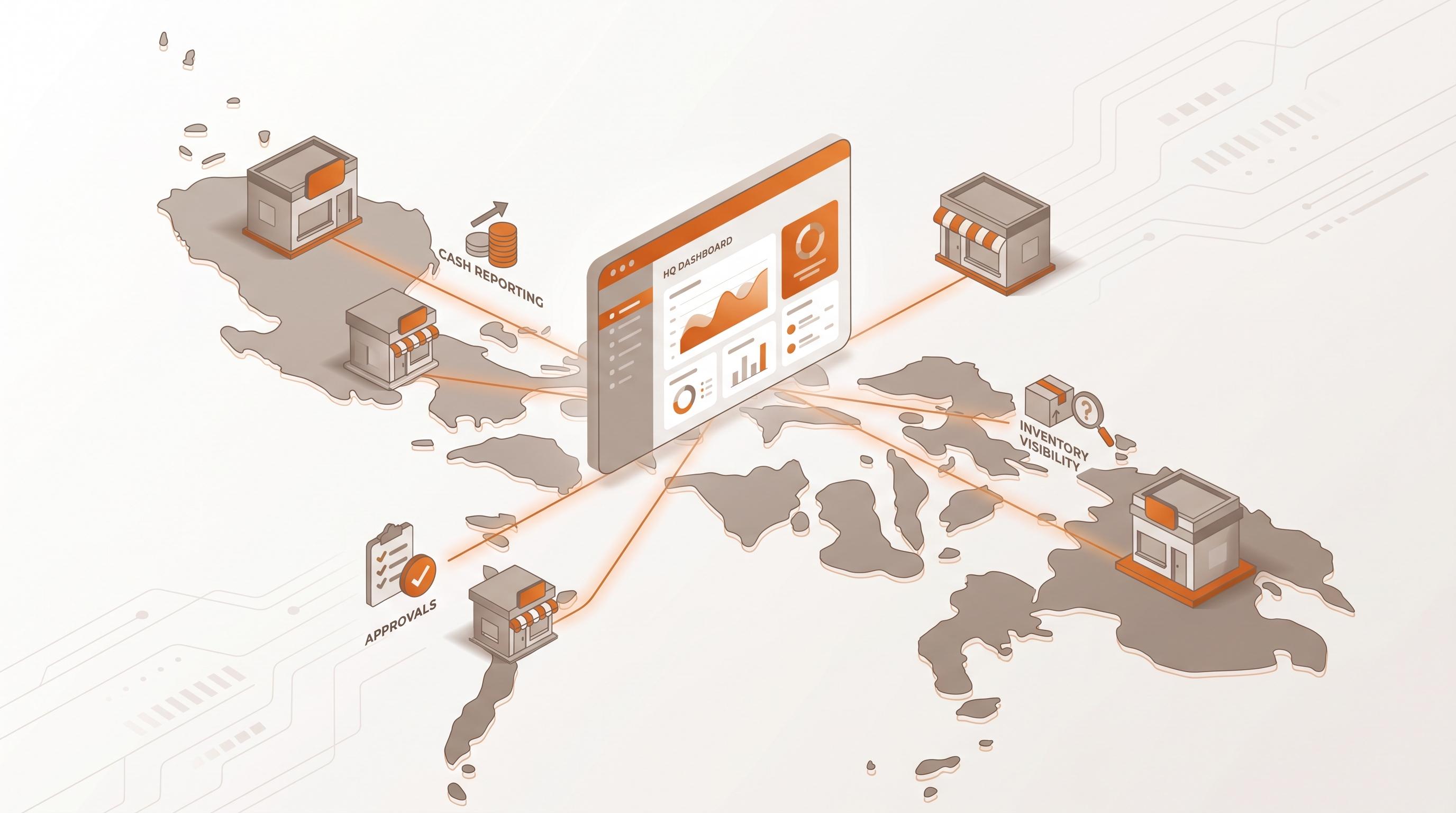
If you run operations, finance, or general management for a multi-branch retail business in the Philippines, the real problem is usually not sales visibility. Teams that start by searching for the best ERP for manufacturing are often trying to solve a broader control issue: weak visibility between branches and head office. In retail, that gap shows up in late reports, scattered approvals, missing support files, and too much manual follow-up long before it shows up in headline performance.
That is where multi-branch retail operations start to break. One branch sends a repair request through chat. Another emails a supplier receiving document. Daily cash reports come in late or in different formats. Petty cash requests sit in message threads. Store incidents are raised informally, then followed up manually. None of those issues looks major on its own. Together, they create the kind of friction that slows decisions, weakens control, and makes expansion harder.
For Philippine retail chains, branch-to-HQ visibility is not just an operations improvement. It is one of the clearest signs of whether the business can scale without losing control.
TL;DR: Philippine retail chains usually lose control between branches and HQ when requests, reports, and approvals stay manual. As branch count grows, those small workflow gaps turn into slower decisions, weaker accountability, and more follow-up for finance and operations. The first fix is to standardize high-friction branch workflows such as cash reporting, approvals, repairs, and supplier receiving.
Multi-branch retail operations become harder when store growth outpaces process discipline. What worked for five branches usually breaks at 20.
Every new store adds more approvals, more branch requests, more store-level exceptions, and more daily reporting. If those workflows still rely on paper, spreadsheets, chat groups, and email, HQ ends up chasing updates instead of managing performance.
This is where growth starts to feel expensive. Store teams follow up repeatedly because they do not know what has been approved. Head office teams spend time hunting for missing files instead of solving issues. Delays pile up in small ways until they become a structural problem.
Rule of thumb: if opening a new branch means adding more manual follow-up at HQ, the business is not scaling its operating model. It is scaling its coordination risk.
Branch-to-HQ visibility matters in the Philippines because many retail chains are expanding across cities, regions, and channel formats while still running on manual coordination.
In practice, that often means:
daily cash or till reports submitted in different templates
petty cash and branch expense requests raised through chat
repair and maintenance requests with no clear status tracking
supplier receiving documents sent manually from stores to HQ
branch incidents escalated informally with weak accountability
approvals delayed because the workflow lives across too many channels
When this happens, leadership cannot answer simple questions fast enough. Which branches have submitted their cash reports? Which repairs are still unresolved? Which supplier documents are missing? Which requests are pending approval?
If those answers are hard to get, the business already has a visibility problem.
Finance usually feels the breakdown before anyone else. In multi-branch retail operations, finance depends on complete and timely branch information.
That pressure gets worse as digital payments increase. Cards, bank transfers, e-wallets, and other payment channels create more reconciliation work, which is why the Bangko Sentral ng Pilipinas’ 2023 report on digital payments in the Philippines and its 2024 update are useful context for retail finance teams. If branch cash reports, support files, and payment records still arrive manually, month-end close slows down and confidence in the numbers drops.
What looks like a finance bottleneck is often an operations problem upstream. If store-level workflows are fragmented, finance will always end up doing more follow-up, more validation, and more cleanup than it should. If you are evaluating whether the fix is process redesign or a broader platform change, our 2026 ERP buyer's guide for Philippine mid-market businesses provides the broader selection framework.
Diagnostic statement: if finance closes slowly because branch records arrive late, the real issue is rarely finance alone. It is usually weak branch process discipline upstream.
If this sounds familiar, contact Softype to discuss how growing retail chains can standardize branch workflows, improve visibility, and reduce manual follow-up between stores and HQ.
Weak retail branch management does more than slow reporting. It affects inventory control, profitability, and customer experience across the network.
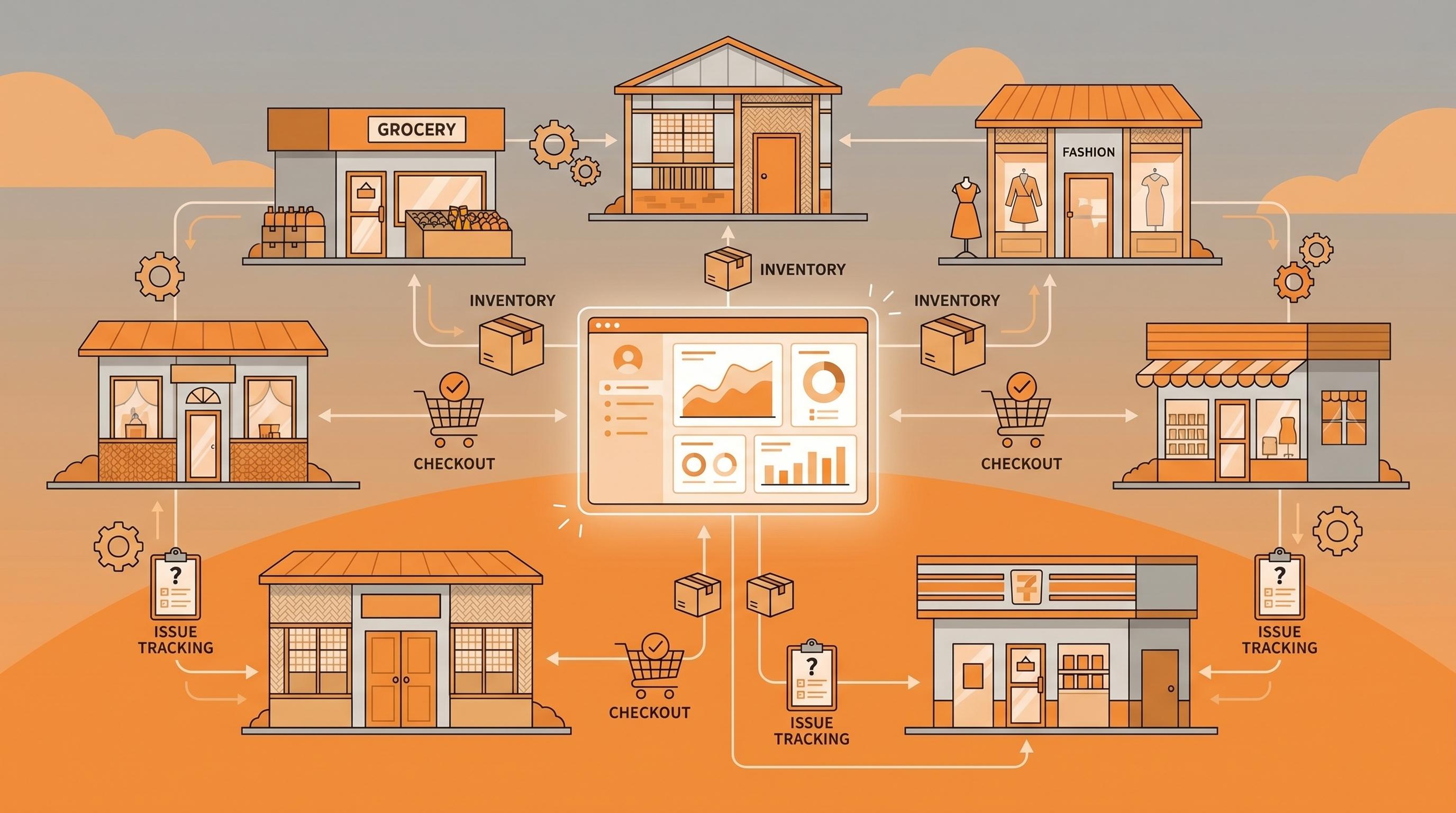
One branch may be out of stock while another carries slow-moving inventory. A supplier delivery may be received at store level but not reflected clearly at HQ. A branch may look strong on revenue while still creating margin pressure because underlying store activity is poorly tracked.
This gets more serious when retailers add online channels. Once physical stores, marketplaces, social selling, and direct online orders all depend on the same operating backbone, weak branch coordination becomes more expensive. That broader pattern also shows up in McKinsey’s work on the omnichannel supply chain and in Gartner’s 2025 retail trends view as retailers try to connect store operations, fulfillment, and customer experience. For retailers comparing branch-ready POS options, Softype’s Odoo POS for Philippine Business page shows what that connected setup can look like.
Retail operations management problems usually show up in daily routines before they show up in a major review.
Common warning signs include:
HQ constantly following up on branch requests and exceptions
delayed or inconsistent cash reporting from stores
missing receiving documents and incomplete support files
slow approvals for store expenses, repairs, or exceptions
different branches using different formats for the same workflow
low visibility into what is pending, approved, rejected, or unresolved
more spreadsheet consolidation at month-end
lower confidence in branch-level information
When these issues become normal, the business is no longer dealing with a few inefficiencies. It is dealing with a scaling problem.
This is the angle many search results skip. They jump straight to features. But before a retailer chooses any platform, it should identify which branch-to-HQ workflows create the most manual follow-up, the most missing documentation, and the least status visibility. That is usually where control is already breaking down, and it is the best place to start standardizing first.
Most generic articles focus on inventory visibility, omnichannel software, or unified dashboards. The more useful question for a growing Philippine retail chain is simpler: how much daily follow-up does HQ need just to keep branch workflows moving? That follow-up load is an early measure of coordination risk. If approvals, cash reports, receiving documents, repair requests, and exception handling all depend on repeated reminders, the business does not just have a software gap. It has a scaling risk that will keep getting more expensive as more branches are added.
Coordination risk is measurable, not just anecdotal. If a retailer wants to know whether branch-to-HQ control is improving, it should track a short operating scorecard that shows where follow-up, missing documentation, and response delays are still concentrated.
on-time cash or till report submission by branch
approval turnaround time for branch requests and exceptions
missing supplier receiving documents and support files at period close
aging of open repair and maintenance requests
unresolved store incidents by branch
how much manual follow-up HQ still needs to get complete branch information
The first move is not to digitize everything at once. The first move is to standardize the branch-to-HQ workflows that create the most friction and the most control risk.
For most Philippine retail chains, that means starting with:
store requests and branch approvals
daily cash or till reporting
petty cash and expense submissions
repair and maintenance requests
supplier receiving documents
branch incidents and exception reporting
These are operational workflows, but the impact is wider than operations. Once these are standardized, the business gains faster response times, clearer accountability, better traceability, and stronger visibility across the network.
This is also where Softype is relevant. Retailers do not solve this problem with another disconnected tool or another reporting file. They solve it with a connected operating model, which is exactly what our ERP for Retail approach is built around: linking branch activity, approvals, finance, and operating records so HQ can actually manage the network.
This becomes an ERP decision when branch workflow problems are no longer isolated to one team. Once approvals, branch expenses, receiving documents, payment records, and store-level exceptions start affecting finance, inventory visibility, and management reporting at the same time, patching the process with one more tool usually adds complexity instead of control. At that point, the business needs a more connected operating backbone rather than another workaround.
Standardization fails when nobody owns the handoff between branch teams and head office. Branch managers should own timely submission and complete supporting documents, while HQ owners should own response times, approval rules, and status visibility so requests do not disappear between teams.
For a growing retail chain, the best ERP for manufacturing is not relevant because it serves factories better than stores. It is relevant only if the buyer is really looking for stronger process control, approval discipline, inventory visibility, and cleaner reporting across multiple locations. In a retail context, the capabilities that matter most are branch-level workflow tracking, role-based approvals, timely document capture, connected finance records, and clear status visibility from store to HQ.
The safest rollout is phased, not big-bang. Start with one or two high-friction workflows, enforce one submission format and one approval path, set simple turnaround targets, and only then expand to other branch processes once stores are following the same routine consistently.
The strongest internal case is usually operational, not technical. Show how much time HQ spends chasing reports, how often approvals stall, how many support files arrive late, and where branch issues stay unresolved for too long. When leaders can see the cost of repeated follow-up, delayed close, weak accountability, and inconsistent branch execution, the move from manual coordination to a connected operating model becomes easier to justify.
The real question is not whether digital transformation matters. The real question is whether your current branch-to-HQ model can support another wave of growth.
If every new branch adds more paperwork, more follow-up, and more manual coordination, then growth is not really scaling. It is multiplying operating risk.
For multi-branch retail operations in the Philippines, better branch-to-HQ visibility is one of the clearest ways to improve control without slowing expansion.
Retailers that want to reduce branch friction, improve control, and build a more scalable operating backbone can contact Softype to start the conversation.
Multi-branch retail operations are the operating workflows that keep multiple store locations aligned with head office. They cover branch reporting, cash handling, approvals, inventory coordination, supplier receiving, and store issue management across the chain.
Philippine retail chains lose visibility as they grow because manual branch workflows do not scale cleanly. What starts as paper forms, spreadsheets, chat threads, and email turns into delays, inconsistent reporting, and weaker accountability once more branches are added.
Branch-to-HQ visibility is important because leadership needs a clear, current view of what stores are requesting, reporting, and escalating. Without that visibility, approvals slow down, documents go missing, and head office spends too much time following up instead of managing performance.
Finance cares about retail branch management because accurate reconciliation depends on timely, complete branch information. When reports, support files, and payment records arrive late or inconsistently, month-end close slows down and control risk rises.
Retail chains should standardize branch approvals, daily cash reporting, petty cash, repair requests, supplier receiving documents, and exception tracking first. These are usually the workflows creating the most daily friction, the most follow-up, and the biggest visibility gaps between stores and HQ.
Retail chains rarely lose control in one dramatic moment. They lose it gradually as branch count rises while branch-to-HQ workflows stay manual.
The retailers that fix this early gain more than faster reporting. They gain the ability to open new branches, enter new regions, and add new channels without turning head office into a follow-up machine. For a broader view of how Philippine businesses should evaluate the systems behind that growth, see our Best ERP System in the Philippines: 2026 Mid-Market Buyer's Guide.


Helping businesses thrive with integrated ERP solutions.
NetSuite
Service
Company
Contact Us
Copyright © 2026


