

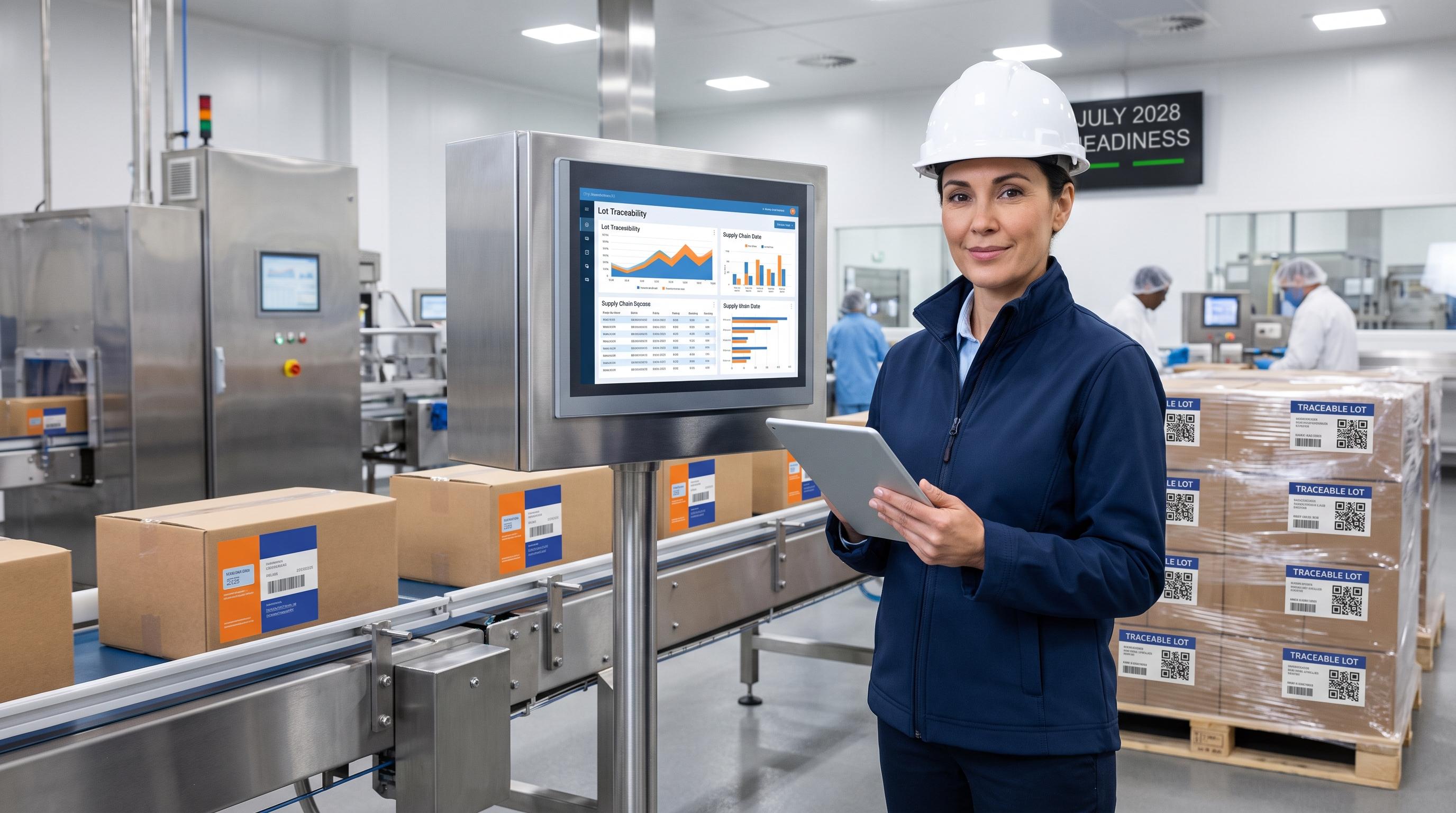
If your team is searching for the best ERP for manufacturing, FSMA 204 gives you a more useful test than any demo. If you handle food on the FDA Food Traceability List, you need records that connect lot code, quantity, dates, locations, trading partners, and source documents across the events you perform. The real question is simple: can you show a clean, lot-linked story from receiving through shipping within 24 hours of an FDA request?
For QA leaders, food safety teams, and operations executives, FSMA 204 is not just a paperwork rule. It is a traceability design rule. It asks whether the data your team creates in receiving, production, repacking, storage, and shipping stays connected by lot without relying on memory, inbox searches, or spreadsheet rebuilds.
The strongest FSMA 204 programs do not bolt traceability onto operations after the fact. They capture the right data during normal work. Receiving records the supplier lot. Production records which lots were consumed and what lot was created. Shipping records the finished lot against the outbound order. When those records stay connected, compliance becomes much easier.
FSMA 204 is the food traceability rule under Section 204(d) of the Food Safety Modernization Act. It adds recordkeeping requirements for certain foods on the FDA Food Traceability List, often shortened to FTL. The rule is built around Critical Tracking Events, or CTEs, and Key Data Elements, or KDEs.
A CTE is the event where your team must create or keep traceability records. A KDE is the specific data tied to that event. Receiving needs one set of data. Transforming needs another. Shipping needs another. The rule does not ask whether you track lots somewhere in the business. It asks whether the right event-level data stays tied to the right lot as the food moves through your operation.
For most food manufacturers, the core job is straightforward. Preserve supplier lot identity at receiving. Preserve input-to-output genealogy during transformation. Preserve finished-lot identity through shipping. That is the record chain FDA needs when it asks you to trace backward, forward, or both.
The original compliance date was January 20, 2026. FDA has proposed extending that date by 30 months to July 20, 2028, and most planning now uses that July 2028 horizon. The extra time matters, but it does not remove the design work.
Teams should not read the extension as permission to wait. Real readiness depends on process design, supplier data, lot-code rules, operator behavior, and system integration. Those things take time to test and stabilize. If your team is still sorting out broader recall readiness, this FDA compliance guide for food manufacturers helps separate general traceability work from FSMA 204-specific design.
Use the extra runway to close scope gaps now. Which foods are covered? Which suppliers can pass usable lot data? How does production tie input lots to output lots? Do outbound records preserve the immediate recipient and shipment reference? Those are process questions, not end-of-project details.
FSMA 204 applies to businesses that manufacture, process, pack, or hold foods on the FTL, subject to exemptions and partial exemptions. In practice, food manufacturers should evaluate coverage item by item rather than rely on broad category guesses.
The FTL includes categories such as leafy greens, fresh-cut fruits and vegetables, certain cheeses, shell eggs, nut butters, refrigerated ready-to-eat deli salads, sprouts, cucumbers, fresh herbs, some fruits, and certain seafood categories. FDA's official Food Traceability List page is the right place to validate scope.
A good scoping question is this: do we receive, create, transform, store, or ship an FTL food, or a product that still contains an FTL ingredient in the same listed form? If the answer is yes, the next step is to map which CTEs your site performs and where each required KDE is created.
Many FSMA 204 projects go wrong because the team treats KDEs like a static checklist. A better approach is to map each CTE your site performs, then identify the operational record, screen, label, partner file, or source document that creates each KDE at that moment.
The table below shows a practical food-manufacturing view of the five CTEs most teams need to map first.
CTE | When it happens | KDEs your operation should be able to produce |
|---|---|---|
Growing | Harvesting a raw agricultural commodity where it is grown or raised. | Traceability lot code, commodity and variety where relevant, quantity and unit, harvest date, harvest location, grower or source, and supporting reference record. |
Receiving | Taking possession of covered food after transport. | Traceability lot code, product description, quantity and unit, receive date, receiving location, immediate previous source, lot source information, and a reference record such as receiving paperwork or a supplier document. |
Creating | Initial packing or creating a traceability lot for covered food. | New traceability lot code, product description, quantity and unit, date, location, lot source, and a supporting record showing how that lot was established. |
Transforming | Processing, commingling, repacking, relabeling, or otherwise changing the food while it remains on the FTL. | For inputs: each input lot, product description, and quantity used. For outputs: new traceability lot code, output product, quantity and unit, date, location, lot source, and a record that ties the output back to every input lot. |
Shipping | Arranging transport from one location to another. | Traceability lot code, product description, quantity and unit, ship date, shipping location, immediate subsequent recipient or receiving location, and the shipment reference record. |
FDA also discusses other events, including cooling and first land-based receiving for some supply chains. That matters most for upstream produce and seafood operations. The safest reference for rule detail is FDA's questions and answers on additional traceability records for certain foods.
One point matters for processors and manufacturers: strong receiving records do not solve transformation records for you. A company can capture supplier lots well and still fail FSMA 204 if it cannot show which input lots fed a finished output lot, in what quantity, at what site, and under which supporting record.
A strong traceability plan turns the rule into day-to-day operating choices. It should name which foods are in scope, which CTEs each site performs, where each KDE is captured, who owns each handoff, what reference record supports each event, and how the business will retrieve the record chain under pressure.
It should also cover partner data. Suppliers must pass forward lot data in a usable format. Internal teams must preserve that identity through production and storage. Shipping must keep finished lots tied to orders and recipients. If one handoff breaks, the whole story breaks.
That is why mock recalls matter. A traceability plan is not finished when the team writes it down. It is finished when the team can run the trace from a live lot code and show that the records come back fast, clean, and complete.

FSMA 204 is often described as a recordkeeping rule, but the real pressure comes from retrieval speed. FDA is not asking whether your company can eventually assemble a story. It is asking whether the right records are already linked well enough to come back quickly and cleanly.
That is why the rule exposes weak handoffs between departments. Receiving may hold supplier information. Production may hold batch usage. Warehouse may hold shipping records. QA may hold deviation records. If those threads are not connected by lot and backed by source documents, your team has to reconstruct instead of retrieve.
Generic FSMA 204 explainers usually stop at listing CTEs and KDEs. The harder problem is response ownership: who pulls receiving records, who proves input-to-output genealogy, who validates source documents, and who signs off that the trace is complete before anything goes to FDA. Companies that settle that ownership early respond faster because they are retrieving a prepared evidence pack, not improvising across departments.
Most failures do not start with the rule text. They start in the gaps between real workflows. Supplier lot data arrives in a format no one can reuse. Operators pick the wrong lot because labels are unclear. Production records the output lot but not the exact input quantities. Shipping keeps the order record but not the lot-to-order link. QA stores a support file in a place operations cannot find under pressure.
Teams also fail when they treat compliance as an audit document instead of an operating system issue. The rule depends on naming rules, scanning discipline, role clarity, and record retrieval. If the team only talks about compliance in project meetings, the plant will still struggle when a real trace request arrives.
The fix is practical. Tighten lot-code rules. Make source documents easy to retrieve. Train operators on why lot accuracy matters. Test live transactions, not sample spreadsheets. If your current process still depends on manual cleanup, this FDA compliance guide for food manufacturers shows where ERP-backed traceability closes the biggest gaps. Repeat until the trace works without heroics.
The best ERP for manufacturing is not the one with the best demo language. It is the one that proves it can carry lot identity, event records, and source documents through the real motions your site performs. For FSMA 204, that usually means lot-numbered receiving, production genealogy, searchable source records, and outbound trace by lot and recipient.
That is also why buyers should not evaluate food operations with a generic checklist. This food ERP buyer's checklist helps teams judge process manufacturing fit, while this NetSuite for food processing guide shows why different food models need different system design choices.
In a NetSuite-centered setup, lot-numbered item records, purchase receipts, work orders, production transactions, inventory detail, and item fulfillment records can form the backbone of traceability. The ERP is not compliant by default. The process becomes defensible only when the configuration matches how the plant actually receives, transforms, stores, and ships food. For teams still comparing options, this food and beverage ERP features guide is a useful companion because it shows whether the platform can support the traceability design you are trying to enforce.
If your team wants a practical view of where the trace chain still breaks, a readiness assessment is the fastest next step. It helps you check lot control, document flow, ownership gaps, and retrieval risk before July 2028, and it gives operations and QA leaders a clearer starting point than another generic software demo.
The fastest way to assess readiness is to group the work by the CTEs your site performs. If the team cannot show where each KDE is created, how it is checked, and how it can be retrieved by lot, the design is not finished.
Scope FTL foods correctly. Map every covered finished good, raw material, and relevant ingredient to the Food Traceability List. Record why each item is covered, exempt, or out of scope.
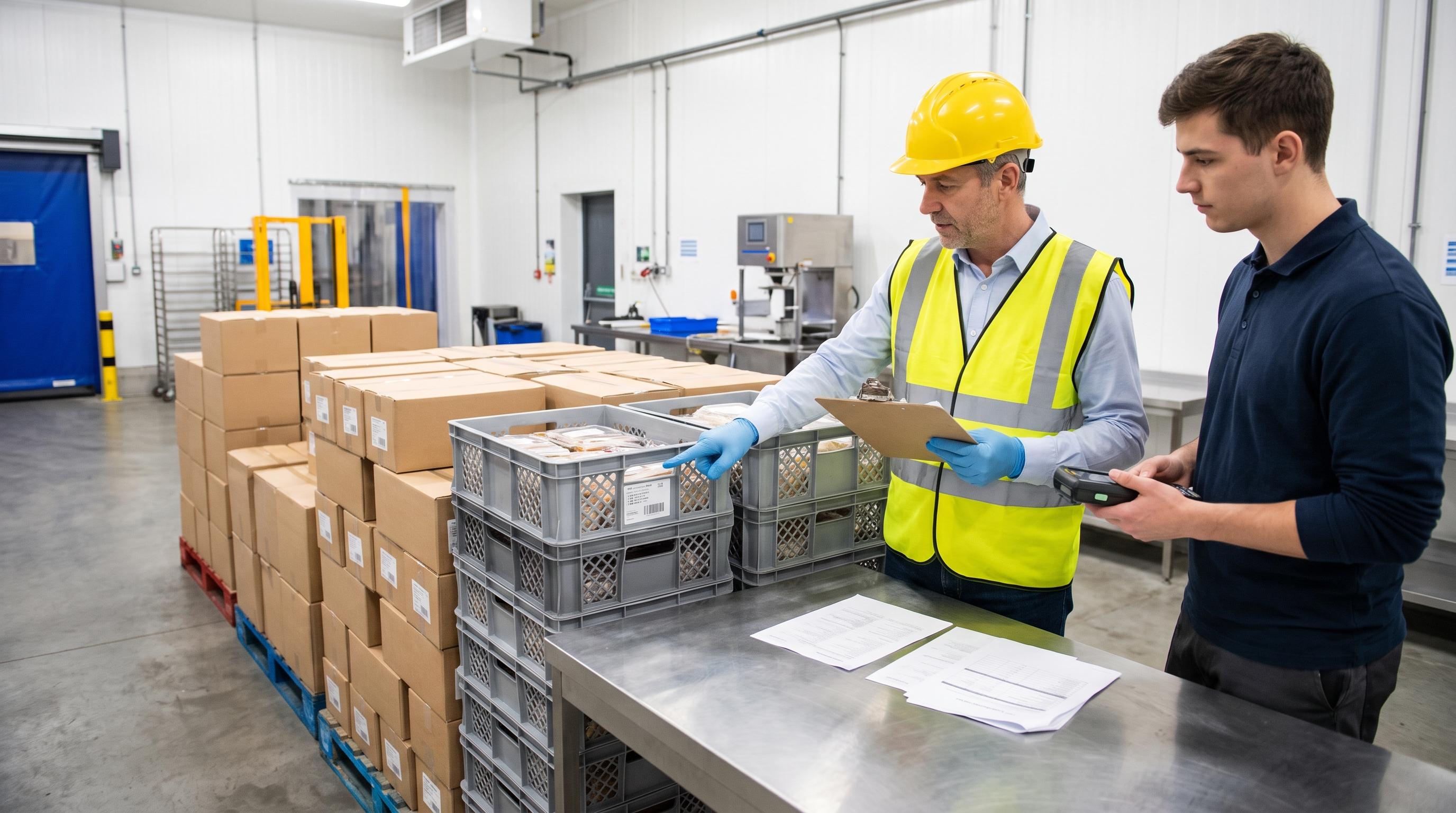
Test receiving KDE capture. Confirm the supplier lot, product description, quantity, receive date, source, receiving location, and source record are captured at receipt, not added later.
Test transformation genealogy. Confirm operators record every input lot and quantity used, that output lot assignment follows a controlled rule, and that the final record ties all inputs to the output lot.
Test shipping KDE capture. Confirm each outbound line preserves the finished lot, quantity, ship date, shipping location, immediate recipient, and shipment reference record.
Test retrieval under pressure. Run a timed mock recall starting from a finished lot and from an input lot. The result should come from live transactions, not a manually rebuilt spreadsheet.
A good mock recall proves four things. First, the team can start from a lot and pull backward and forward records fast. Second, the team can show the source documents that support each event. Third, the team knows who owns receiving, production, QA, and shipping evidence. Fourth, the team can explain any gap before FDA does. If your broader traceability process still leans on manual cleanup, revisit this food manufacturing compliance guide before the next drill.
It may, if your company manufactures, processes, packs, or holds food on the FDA Food Traceability List. The right way to answer that question is item by item. Review finished goods, raw materials, and ingredients, then document where exemptions or partial exemptions apply.
A CTE is the event that triggers traceability recordkeeping, such as receiving, transforming, or shipping. A KDE is the specific data tied to that event, such as lot identity, quantity, date, location, source, recipient, and the source record that supports the event.
Paper records are not automatically disqualified, but they do not remove the retrieval burden. If your process depends on manual rebuilds across paper files, spreadsheets, and email attachments, the risk shows up when you need a complete lot-linked response quickly.
NetSuite can support the response when the team captures traceability data in live transactions rather than adding it after the fact. Lot-numbered receiving, production, inventory, and shipping records can provide the backbone, but the real test is whether your configured process can output backward and forward genealogy from real operating data.
GS1 standards can improve partner data exchange, especially when labels, scanners, and trading-partner workflows are involved. They do not replace the traceability lot code or the event-specific KDEs required by FSMA 204. For current guidance, use GS1 US's FSMA standards page.
The original compliance date was January 20, 2026, and FDA has proposed extending that date to July 20, 2028. Most planning now uses that July 2028 horizon, but regulated businesses should keep watching FDA updates and treat the extra time as implementation runway, not a reason to delay design work.
Start with one operational question: if FDA gave us a lot code today, could we show receiving, transformation, and shipping records for that lot from live systems without rebuilding the chain manually? That single test usually shows whether the project is integrated or still dependent on workarounds.
July 2028 should not be just a date on the calendar. It should be the point by which your team can prove that lot identity, event records, and source documents stay connected from start to finish.
That is the standard FSMA 204 sets. Teams that build toward it now will face far less risk when the real trace request arrives.


Helping businesses thrive with integrated ERP solutions.
NetSuite
Service
Company
Contact Us
Copyright © 2026


